Republicans have suffered more than an election defeat, they’ve seen the collapse of a decades-long political strategy: The constant and continued use of white working class fear and resentment of black people in order to consolidate, maintain and, when and where possible, expand their base...
Simply speaking, the Republican strategy has, for decades, been to dupe the average, 'work-a-day' , white voters into voting against their own best interests. This has been done by invoking and then politicizing racial fears and resentments, inherent in American society and culture, and ingrained and harbored in the white psyche.
"Dog whistle " politics and policies will not go away any time soon, however, the fact of changing demographics has caught up with a strategy that, at its core, is racist.
Racism is still a fact of political and social life in America. However, it is becoming increasingly clear that the effect and impact of racism as the ideological foundation of political success has eroded to the point where America's first black president was able to win a second term.
Republicans have gotten it so wrong that the Democrats have no need to make a real effort to get it right.
While it may be true that race is no longer a viable tactic in presidential campaigns, it remains a significant determining factor in the nature and quality of daily life for people of color in general and black people in particular. Reduction of the effect of the vernacular of race based politics and policies from the process of electing a president is only part of the challenge. The challenge that remains is removal of the effects that signals and symbols of racial fear and resentment have on our daily lives and discourse:
A shibboleth is a word or phrase whose usage identifies the speaker as belonging to a particular group. It also refers to a word or phrase used to identify, characterize, or symbolize those who do not belong to the particular class or group of people to which the speaker belongs:
the "silent majority", the "southern strategy", "law and order", the "war on poverty", the "war on
drugs", "cultural enrichment", "entitlement programs", "equal opportunity", "affirmative action",
"deficit spending", "voter ID" , and the birth certificate...
A bugaboo is a legendary scary creature:
The angry black man and
The welfare queen....
There are many white people going to bed at night uttering or muttering something like this:
"From ghoulies and ghosties
And long-leggedy beasties
And things that go bump in the night,
Good Lord, deliver us....."
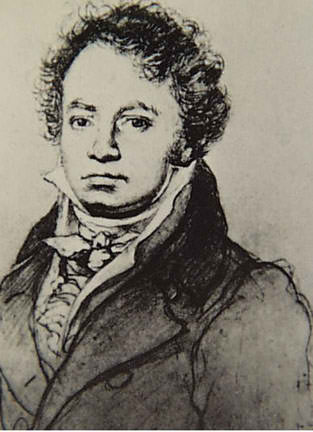
Was Beethoven in fact a black man of African descent?
Why was it necessary for Beethoven's likeness to undergo a transformation which, in my humble opinion, is so readily apparent when an array of sketches and paintings are juxtaposed as they are here?
Why was it necessary for artists and historians to systematically remove any hint of the possibility that Beethoven might have been, or was in fact, a black man?
Why was it imperative that his image go from having distinctly Negroid/African features to some kind of stylized Aryan ideal?
Martin Luther King, Jr., was born in Atlanta, Georgia, on January 15, 1929. He was the oldest son of the Reverend and Mrs. Martin Luther King. He was named Michael Luther after his father, but later the Reverend King changed both their names to Martin Luther in honor of the great church leader.
Unhappily racial experiences made a deep and lasting impression on young Martin. One day his father took him to buy new shoes. When they sat down in the store, the clerk asked them to move to the back of the store. Dr. King took Martin by the hand and left the store rather than take that kind of treatment. Another time, the parents of boys Martin played with told him that they could no longer come out to play with him because they were white and he was black. Martin's feelings were hurt. His mother tried to explain about prejudice. She told him that blacks were no longer slaves, but they were not really free.
Martin liked sports. He played baseball, basketball and wrestling. But he especially liked reading. He liked reading about famous people in black history. He found out what it took for them to overcome difficulties and become successful. He liked to learn new words and use them.
He was fascinated by watching his father, Martin Luther King, Sr., Pastor of Ebenezer Baptist Church in Atlanta, and other ministers control audiences with skillfully chosen words. He longed to follow in their footsteps.
He made words central to his life--weapons of defense and offense. His mother said that she could not recall a time when he was not intrigued by the sound and power of words. He once told her, "I'm going to get me some big words like that." . When he got to high school, his ability to use words enabled him to win an oratorical contest.
In September 1944, when he was only 15 years old, King entered Morehouse College in Atlanta, Georgia. It was a black college, and his father and grandfather had gone there. He knew that his father would like him to become a minister, but at first Martin was not sure that was what he wanted to do. At first, he was undecided as to his course of study. However, his experiences at Morehouse shaped his direction for life. After meeting and talking with Dr. Benjamin E. Mays, the college president, and Professor George Kelsey, head of the religion department, he made up his mind. King was enormously impressed. He saw in Mays what he wanted "a real minister to be"--a rational man whose sermons were both spiritually and intellectually stimulating, a moral man who was socially involved. Thanks largely to Mays, King realized that the ministry could be a respectable force for ideas, even for social protest. And so at seventeen King elected to become a Baptist minister, like his father and grandfather. At eighteen he was ordained a minister. The next year he graduated from Morehouse College with a degree in sociology.
Martin was an excellent student and was the class valedictorian when he graduated in 1951 with a Bachelor of Divinity degree from Crozer. While at Crozer, King attended a lecture by Dr. Mordecai W. Johnson, who was the president of Howard University in Washington, DC. Dr. Johnson "explained how Gandhi had forged Soul Force--the power of love or truth--into a mighty vehicle for social change." He "argued that the moral power of Gandhian nonviolence could improve race relations in America, too." King was mesmerized by Gandhi's concepts, and began reading profusely about his life and philosophy.
In 1951, King graduated from Crozer as valedictorian. He also received the Peral Plafkner Award for scholarship, $1,200, and the Lewis Crozer Fellowship to continue his studies. While at Boston University, Martin met Coretta Scott. Coretta, a beautiful young lady from Marion, Alabama, a graduate of Antioch College in Ohio, was studying voice at the New England Conservatory of Music. She and Martin were married in June, 1953. His father performed the ceremony at her home in Alabama.
Coretta had grown up with segregation too. She shared Martin's dream of a time when everyone everywhere could enjoy equal rights. On June 5, 1955, when he had completed his Ph.D. in Systematic Theology, the couple decided that they could make the greatest contribution by going back down South to work. Martin was installed by his father as pastor of the Dexter Avenue Baptist Church in Montgomery, Alabama, in October of 1954. Just a little more that a year later, Yolanda, the first of the Kings' four children was born.
In December of 1955, Mrs. Rosa Parks refused to give up her seat on a Montgomery bus. Mrs. Parks was later tried in Montgomery City Court, charged with and found guilty of violating a state law mandating segregation. She was fined $10. Her attorney appealed the conviction. Coincident with Mrs. Parks' trial a one-day boycott of the buses by many members of Montgomery's Black community, was planned. Dr. King was asked to help, as was his friend, the Reverend Ralph Abernathy. As a result of this, an organization was established, the "Montgomery Improvement Association," (MIA) to orchestrate a complete and ongoing response to Montgomery's segregation. Dr. King was chosen president. Blacks walked to work or took cars or taxis, but they did not ride the buses. The one-day boycott stretched out to 382 days. Finally, after more than a year of protest, on November 13, 1956, the United States Supreme Court ruled that segregation on buses was against the law.
Martin Luther King, Jr., knew that even though that battle against bus discrimination had been won in Montgomery, there was more that needed doing. As a result, on January 10-11, 1957, 60 Black leaders from 10 Southern states met at the Ebenezer Baptist Church in Atlanta and founded the Southern Conference on Transportation and Non-violent Integration. Its original agenda concerned "segregation in transportation facilities and voter registration."
In February 1957, the organization elected Dr. King as President and changed its name to the Southern Leadership Conference (SLC), organized to fight "Jim Crow" laws that discrimination against blacks. Offices for the new group were in Atlanta, and the Kings moved there. Martin became assistant pastor at his father's church, the Ebenezer Baptist Church. He spent much time traveling. He spoke all over the country, urging nonviolent ways of gaining civil rights. He and Mrs. King visited Europe and Africa. They went to India to study Mahatma Gandhi's nonviolent ways of fighting for freedom.
King spoke of how a Pilgrimage would be an appeal to the nation, and the Congress, to pass a civil rights bill that would give the Justice Department the power to file law suits against discriminatory registration and voting practices anywhere in the South. On August 28, 1963, at least 250,000 people descended on Washington in the "largest single demonstration in movement history." Dr. King captured the day. Following the march, the organizers were invited to a reception at the White House, where President John F. Kennedy "was bubbling over the success of the event."
Perhaps the ultimate recognition of Dr. King's crusade to secure equal rights for all came on December 10, 1964, when, at age 35, he was the youngest person ever to receive the Nobel Peace Prize.
In 1966, he and his family moved to Chicago. People in the slums of big cities had problems that were as serious as the discrimination they faced in the South. King planned a Poor People's March on Washington, D.C. Shortly before the march, Dr. King went to Memphis, Tennessee, where garbage workers were on strike for better working conditions. He led marchers through the streets in support of the strike. Violence broke out, and a young man was killed.
On April 4, King stood on the balcony of his hotel in Memphis, talking with men who had been with him in his many civil rights efforts....
Edward Brooke is the first African-American elected to the U.S. Senate by popular vote
Using perseverance, he avoided anger, disillusionment, President Obama says
Brooke, 90, was a GOP senator from Massachusetts for two full terms, from 1967 to 1979
Brooke, thankful for honor, says he misses friend Sen. Ted Kennedy, who died in August
Washington (CNN) -- Edward Brooke, the first African-American elected to the U.S. Senate by popular vote, was honored Wednesday with a Congressional Gold Medal.
"At a time when so many doors were closed to African-Americans, others might have become angry or disillusioned," President Obama told an audience in the Capitol Rotunda, where the ceremony honoring Brooke for Congress' greatest honor was held.
"They might have concluded that no matter how hard they worked, their horizons would always be limited. So why bother? Not Ed Brooke," he said.
Brooke, 90, was a Republican senator from Massachusetts for two full terms, from 1967 to 1979.
"He ran for office, as he put it, to bring people together who had never been together before, and that he did," the president said.
"I don't know anyone else whose fan base includes Gloria Steinem, Barney Frank and Ted Kennedy as well as Mitch McConnell, Mitt Romney and George W. Bush. That's a coalition builder," he said.
Bravery and valor on the battlefield are of no consequence if the war being fought has no just and honorable cause or purpose....There are no legitimate goals or objectives in an unjust or invalid conflict being prosecuted by force of arms and the blood of good people.
My take on the war(s) in the Middle East is simple: We shouldn't have gone in the first place and we have no business being there now...Whether the Department of Defense or the State Department agrees with him or not, the young ex-marine who resigned his diplomatic postition in protest over our continued presence in Afghanistan has it absolutely right. We should stand with him in his brave and bold move to bring attention to the fact that what we are doing in that part of the world is just plain wrong....
In the wake of 9/11, and the notion that we are seeking to bring an international criminal and his criminal enterprise to justice, we have wasted resources and lives on a manhunt that ought to have been concluded long ago.....There is no succinct or cogent articulation of the reasons why we have been at this for as long as we have, and we should not commit another American life to a nefarious conflagration that has, at best, nebulous ideological, philosophical and political underpinnings......
If we truly believe that Bin Laden is alive and being harbored in the region, we should withdraw all of our troops and issue an ultimatum in the strongest possible terms and, failing that, anihilate all of the targets where he may be hiding in such a way as to not risk another American life and then, completely and absolutely walk away from it all.
Nothing good can come from continuing to work with an illegitimate government, rogue mercinaries, drug over-lords and wasting American tax dollars and American lives....I am in full and unfettered support of our troops in the Middle East. I do not, however, accept or agree with our 'reasons' for sending them there....
On November 14, 1960, nearly 49 years ago, 6 year old Ruby Bridges faced hostile crowds, and had to be escorted by U.S. Marshalls , because she was the first black child to attend previously all-white William Frantz Elementary School in New Orleans, Louisiana. Ruby was 6 years old. (Norman Rockwell created the painting above depicting that event.) That morning, she had only been told by her mother that she was going to be attending a new school that day and 'had better behave.' Little did little Ruby know that she would be bombarded with jeers and even death threats; and that she would end up being the sole child in her first grade class because all the other children were kept home by their parents. All because Ruby was Black.
NOW:
A Black girl escorted to school - 2009
On January 5, 2009, nearly 49 years after Ruby attended her school, 7 year old Sasha Obama, faced cheering schoolmates as she is escorted by her Mother and U. S. Secret Service Agents to Sidwell Friends Elementary School in Washington , DC . Her Mother, the current First Lady of the United States of America, had Secret Service escort because Sasha's daddy is now the 44th President of the United States.
Can this be one of the reasons why people under forty have a different view of the world.....????
Some were absolute giants and some were less well known, but all of these performers had an impact on our culture and our lives in ways which most of us will not be able to recognize or acknowledge. In many respects these African-American artists charted and navigated the course for likes of President Barack Obama by making the African-American experience an integral element of America's culutural life and heritage. We owe them a debt of gratitude and many, many thanks......