Monday, February 25, 2013


Sunday, February 3, 2013
Black History Month: The Super Bowl


Wednesday, December 19, 2012
Guest Post: Time Magazine's "Person of the Year", 2012

Monday, December 17, 2012
"We can't tolerate this any more...." Video and Full Text: President Obama's Speech in Newtown, Connecticut
Full text of speech: To all the families, first responders, to the community of Newtown, clergy, guests, scripture tells us, “Do not lose heart. Though outwardly we are wasting away, inwardly, we are being renewed day by day. For light and momentary troubles are achieving for us an eternal glory that far outweighs them all, so we fix our eyes not on what is seen, but on what is unseen, since what is seen is temporary, but what is unseen is eternal. For we know that if the earthly tent we live in is destroyed, we have a building from God, an eternal house in heaven not built by human hands. We gather here in memory of 20 beautiful children and six remarkable adults. They lost their lives in a school that could have been any school in a quiet town full of good and decent people that could be any town in America. Here in Newtown, I come to offer the love and prayers of a nation. I am very mindful that mere words cannot match the depths of your sorrow, nor can they heal your wounded hearts. I can only hope it helps for you to know that you’re not alone in your grief, that our world, too, has been torn apart, that all across this land of ours, we have wept with you. We’ve pulled our children tight. And you must know that whatever measure of comfort we can provide, we will provide. Whatever portion of sadness that we can share with you to ease this heavy load, we will gladly bear it. Newtown, you are not alone. As these difficult days have unfolded, you’ve also inspired us with stories of strength and resolve and sacrifice. We know that when danger arrived in the halls of Sandy Hook Elementary, the school’s staff did not flinch. They did not hesitate. Dawn Hochsprung and Mary Sherlach, Vicki Soto, Lauren Rousseau, Rachel Davino and Anne Marie Murphy — they responded as we all hope we might respond in such terrifying circumstances, with courage and with love, giving their lives to protect the children in their care. We know that there were other teachers who barricaded themselves inside classrooms and kept steady through it all and reassured their students by saying, “Wait for the good guys, they are coming. Show me your smile.” And we know that good guys came, the first responders who raced to the scene helping to guide those in harm’s way to safety and comfort those in need, holding at bay their own shock and their own trauma, because they had a job to do and others needed them more. And then there were the scenes of the schoolchildren helping one another, holding each other, dutifully following instructions in the way that young children sometimes do, one child even trying to encourage a grown-up by saying, “I know karate, so it’s OK; I’ll lead the way out.” As a community, you’ve inspired us, Newtown. In the face of indescribable violence, in the face of unconscionable evil, you’ve looked out for each other. You’ve cared for one another. And you’ve loved one another. This is how Newtown will be remembered, and with time and God’s grace, that love will see you through. But we as a nation, we are left with some hard questions. You know, someone once described the joy and anxiety of parenthood as the equivalent of having your heart outside of your body all the time, walking around. With their very first cry, this most precious, vital part of ourselves, our child, is suddenly exposed to the world, to possible mishap or malice, and every parent knows there’s nothing we will not do to shield our children from harm. And yet we also know that with that child’s very first step and each step after that, they are separating from us, that we won’t — that we can’t always be there for them. They will suffer sickness and setbacks and broken hearts and disappointments, and we learn that our most important job is to give them what they need to become self-reliant and capable and resilient, ready to face the world without fear. And we know we can’t do this by ourselves. It comes as a shock at a certain point where you realize no matter how much you love these kids, you can’t do it by yourself, that this job of keeping our children safe and teaching them well is something we can only do together, with the help of friends and neighbors, the help of a community and the help of a nation. And in that way we come to realize that we bear responsibility for every child, because we’re counting on everybody else to help look after ours, that we’re all parents, that they are all our children. This is our first task, caring for our children. It’s our first job. If we don’t get that right, we don’t get anything right. That’s how, as a society, we will be judged. And by that measure, can we truly say, as a nation, that we’re meeting our obligations? Can we honestly say that we’re doing enough to keep our children, all of them, safe from harm? Can we claim, as a nation, that we’re all together there, letting them know they are loved and teaching them to love in return? Can we say that we’re truly doing enough to give all the children of this country the chance they deserve to live out their lives in happiness and with purpose? I’ve been reflecting on this the last few days, and if we’re honest with ourselves, the answer’s no. We’re not doing enough. And we will have to change. Since I’ve been president, this is the fourth time we have come together to comfort a grieving community torn apart by mass shootings, fourth time we’ve hugged survivors, the fourth time we’ve consoled the families of victims. And in between, there have been an endless series of deadly shootings across the country, almost daily reports of victims, many of them children, in small towns and in big cities all across America, victims whose — much of the time their only fault was being at the wrong place at the wrong time. We can’t tolerate this anymore. These tragedies must end. And to end them, we must change. We will be told that the causes of such violence are complex, and that is true. No single law, no set of laws can eliminate evil from the world or prevent every senseless act of violence in our society, but that can’t be an excuse for inaction. Surely we can do better than this. If there’s even one step we can take to save another child or another parent or another town from the grief that’s visited Tucson and Aurora and Oak Creek and Newtown and communities from Columbine to Blacksburg before that, then surely we have an obligation to try. In the coming weeks, I’ll use whatever power this office holds to engage my fellow citizens, from law enforcement, to mental health professionals, to parents and educators, in an effort aimed at preventing more tragedies like this, because what choice do we have? We can’t accept events like this as routine. Are we really prepared to say that we’re powerless in the face of such carnage, that the politics are too hard? Are we prepared to say that such violence visited on our children year after year after year is somehow the price of our freedom? You know, all the world’s religions, so many of them represented here today, start with a simple question. Why are we here? What gives our life meaning? What gives our acts purpose? We know our time on this Earth is fleeting. We know that we will each have our share of pleasure and pain, that even after we chase after some earthly goal, whether it’s wealth or power or fame or just simple comfort, we will, in some fashion, fall short of what we had hoped. We know that, no matter how good our intentions, we’ll all stumble sometimes in some way. We’ll make mistakes, we’ll experience hardships and even when we’re trying to do the right thing, we know that much of our time will be spent groping through the darkness, so often unable to discern God’s heavenly plans. There’s only one thing we can be sure of, and that is the love that we have for our children, for our families, for each other. The warmth of a small child’s embrace, that is true. The memories we have of them, the joy that they bring, the wonder we see through their eyes, that fierce and boundless love we feel for them, a love that takes us out of ourselves and binds us to something larger, we know that’s what matters. We know we’re always doing right when we’re taking care of them, when we’re teaching them well, when we’re showing acts of kindness. We don’t go wrong when we do that. That’s what we can be sure of, and that’s what you, the people of Newtown, have reminded us. That’s how you’ve inspired us. You remind us what matters. And that’s what should drive us forward in everything we do for as long as God sees fit to keep us on this Earth. “Let the little children come to me,” Jesus said, “and do not hinder them, for to such belongs the kingdom of heaven.” Charlotte, Daniel, Olivia, Josephine, Ana, Dylan, Madeleine, Catherine, Chase, Jesse, James, Grace, Emilie, Jack, Noah, Caroline, Jessica, Benjamin, Avielle, Allison, God has called them all home. For those of us who remain, let us find the strength to carry on and make our country worthy of their memory. May God bless and keep those we’ve lost in his heavenly place. May he grace those we still have with his holy comfort, and may he bless and watch over this community and the United States of America.
Friday, December 14, 2012
The Failure of the Politics of Fear and Resentment: Republican Shibboleths, Bugaboos, and Things That Go Bump in the Night


Monday, December 10, 2012
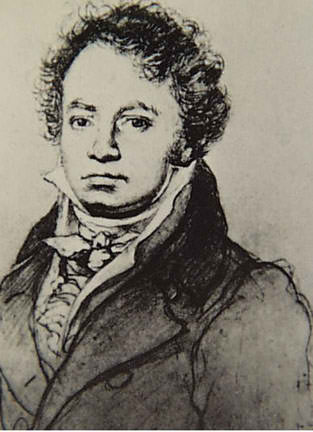
Would the Real Beethoven Please Stand Up!


Tuesday, January 12, 2010
Dr. Martin Luther King, Jr., January 15, 1929 - April 4, 1968
--------------------------------------------------------------------------------
Martin Luther King, Jr., was born in Atlanta, Georgia, on January 15, 1929. He was the oldest son of the Reverend and Mrs. Martin Luther King. He was named Michael Luther after his father, but later the Reverend King changed both their names to Martin Luther in honor of the great church leader.
Unhappily racial experiences made a deep and lasting impression on young Martin. One day his father took him to buy new shoes. When they sat down in the store, the clerk asked them to move to the back of the store. Dr. King took Martin by the hand and left the store rather than take that kind of treatment. Another time, the parents of boys Martin played with told him that they could no longer come out to play with him because they were white and he was black. Martin's feelings were hurt. His mother tried to explain about prejudice. She told him that blacks were no longer slaves, but they were not really free.
Martin liked sports. He played baseball, basketball and wrestling. But he especially liked reading. He liked reading about famous people in black history. He found out what it took for them to overcome difficulties and become successful. He liked to learn new words and use them.
He was fascinated by watching his father, Martin Luther King, Sr., Pastor of Ebenezer Baptist Church in Atlanta, and other ministers control audiences with skillfully chosen words. He longed to follow in their footsteps.
He made words central to his life--weapons of defense and offense. His mother said that she could not recall a time when he was not intrigued by the sound and power of words. He once told her, "I'm going to get me some big words like that." . When he got to high school, his ability to use words enabled him to win an oratorical contest.
In September 1944, when he was only 15 years old, King entered Morehouse College in Atlanta, Georgia. It was a black college, and his father and grandfather had gone there. He knew that his father would like him to become a minister, but at first Martin was not sure that was what he wanted to do. At first, he was undecided as to his course of study. However, his experiences at Morehouse shaped his direction for life. After meeting and talking with Dr. Benjamin E. Mays, the college president, and Professor George Kelsey, head of the religion department, he made up his mind. King was enormously impressed. He saw in Mays what he wanted "a real minister to be"--a rational man whose sermons were both spiritually and intellectually stimulating, a moral man who was socially involved. Thanks largely to Mays, King realized that the ministry could be a respectable force for ideas, even for social protest. And so at seventeen King elected to become a Baptist minister, like his father and grandfather. At eighteen he was ordained a minister. The next year he graduated from Morehouse College with a degree in sociology.
Martin was an excellent student and was the class valedictorian when he graduated in 1951 with a Bachelor of Divinity degree from Crozer. While at Crozer, King attended a lecture by Dr. Mordecai W. Johnson, who was the president of Howard University in Washington, DC. Dr. Johnson "explained how Gandhi had forged Soul Force--the power of love or truth--into a mighty vehicle for social change." He "argued that the moral power of Gandhian nonviolence could improve race relations in America, too." King was mesmerized by Gandhi's concepts, and began reading profusely about his life and philosophy.
In 1951, King graduated from Crozer as valedictorian. He also received the Peral Plafkner Award for scholarship, $1,200, and the Lewis Crozer Fellowship to continue his studies. While at Boston University, Martin met Coretta Scott. Coretta, a beautiful young lady from Marion, Alabama, a graduate of Antioch College in Ohio, was studying voice at the New England Conservatory of Music. She and Martin were married in June, 1953. His father performed the ceremony at her home in Alabama.
Coretta had grown up with segregation too. She shared Martin's dream of a time when everyone everywhere could enjoy equal rights. On June 5, 1955, when he had completed his Ph.D. in Systematic Theology, the couple decided that they could make the greatest contribution by going back down South to work. Martin was installed by his father as pastor of the Dexter Avenue Baptist Church in Montgomery, Alabama, in October of 1954. Just a little more that a year later, Yolanda, the first of the Kings' four children was born.
In December of 1955, Mrs. Rosa Parks refused to give up her seat on a Montgomery bus. Mrs. Parks was later tried in Montgomery City Court, charged with and found guilty of violating a state law mandating segregation. She was fined $10. Her attorney appealed the conviction. Coincident with Mrs. Parks' trial a one-day boycott of the buses by many members of Montgomery's Black community, was planned. Dr. King was asked to help, as was his friend, the Reverend Ralph Abernathy. As a result of this, an organization was established, the "Montgomery Improvement Association," (MIA) to orchestrate a complete and ongoing response to Montgomery's segregation. Dr. King was chosen president. Blacks walked to work or took cars or taxis, but they did not ride the buses. The one-day boycott stretched out to 382 days. Finally, after more than a year of protest, on November 13, 1956, the United States Supreme Court ruled that segregation on buses was against the law.
Martin Luther King, Jr., knew that even though that battle against bus discrimination had been won in Montgomery, there was more that needed doing. As a result, on January 10-11, 1957, 60 Black leaders from 10 Southern states met at the Ebenezer Baptist Church in Atlanta and founded the Southern Conference on Transportation and Non-violent Integration. Its original agenda concerned "segregation in transportation facilities and voter registration."
In February 1957, the organization elected Dr. King as President and changed its name to the Southern Leadership Conference (SLC), organized to fight "Jim Crow" laws that discrimination against blacks. Offices for the new group were in Atlanta, and the Kings moved there. Martin became assistant pastor at his father's church, the Ebenezer Baptist Church. He spent much time traveling. He spoke all over the country, urging nonviolent ways of gaining civil rights. He and Mrs. King visited Europe and Africa. They went to India to study Mahatma Gandhi's nonviolent ways of fighting for freedom.
King spoke of how a Pilgrimage would be an appeal to the nation, and the Congress, to pass a civil rights bill that would give the Justice Department the power to file law suits against discriminatory registration and voting practices anywhere in the South. On August 28, 1963, at least 250,000 people descended on Washington in the "largest single demonstration in movement history." Dr. King captured the day. Following the march, the organizers were invited to a reception at the White House, where President John F. Kennedy "was bubbling over the success of the event."
Perhaps the ultimate recognition of Dr. King's crusade to secure equal rights for all came on December 10, 1964, when, at age 35, he was the youngest person ever to receive the Nobel Peace Prize.
In 1966, he and his family moved to Chicago. People in the slums of big cities had problems that were as serious as the discrimination they faced in the South. King planned a Poor People's March on Washington, D.C. Shortly before the march, Dr. King went to Memphis, Tennessee, where garbage workers were on strike for better working conditions. He led marchers through the streets in support of the strike. Violence broke out, and a young man was killed.
On April 4, King stood on the balcony of his hotel in Memphis, talking with men who had been with him in his many civil rights efforts....


